
10 Common Blocks to Personal Growth and How to Overcome Them
Do you know that feeling of being stuck, even though you know there is more in you?
Like you are going in circles and not really moving forward?
You are not alone.
On the path to more self-confidence, self-love, and personal growth, we all face obstacles.
In this article, we will look at the ten most common blocks and, more importantly, what you can do to overcome them.
Why is self-realisation so difficult?
Many people long for a life that truly fulfils them, yet only a few actually take action.
Why?
Because along the way, there are often invisible obstacles: fears, doubts, social expectations, or deeply rooted beliefs.
These blocks can prevent you from reaching your full potential, often without you even realising it.
1. Fear of change
Change means letting go of what feels familiar, and that can be uncomfortable.
At the same time, many people are afraid of making mistakes or failing.
Sometimes these fears are not even fully conscious, but they still influence your behaviour.
Stepping out of your comfort zone can feel intimidating, but growth happens exactly there.
What you can do:
- Start small
- Change one habit or try something new
- Ask yourself: What is the worst that could realistically happen?
You will often realise that the worst-case scenario is not as bad as it feels in your head.
2. Living according to other people’s expectations
Parents, friends, employers, society – we often feel pressure to meet expectations that are not even our own.
So ask yourself honestly:
Are you living your life for yourself or for others?
At the end of your life, your own experiences will matter – not what others expected from you.
What helps:
- Question your decisions
- Allow yourself to choose your own path
- Accept that not everyone will understand
3. Perfectionism
“If it’s not perfect, it’s not good enough.”
Does that sound familiar?
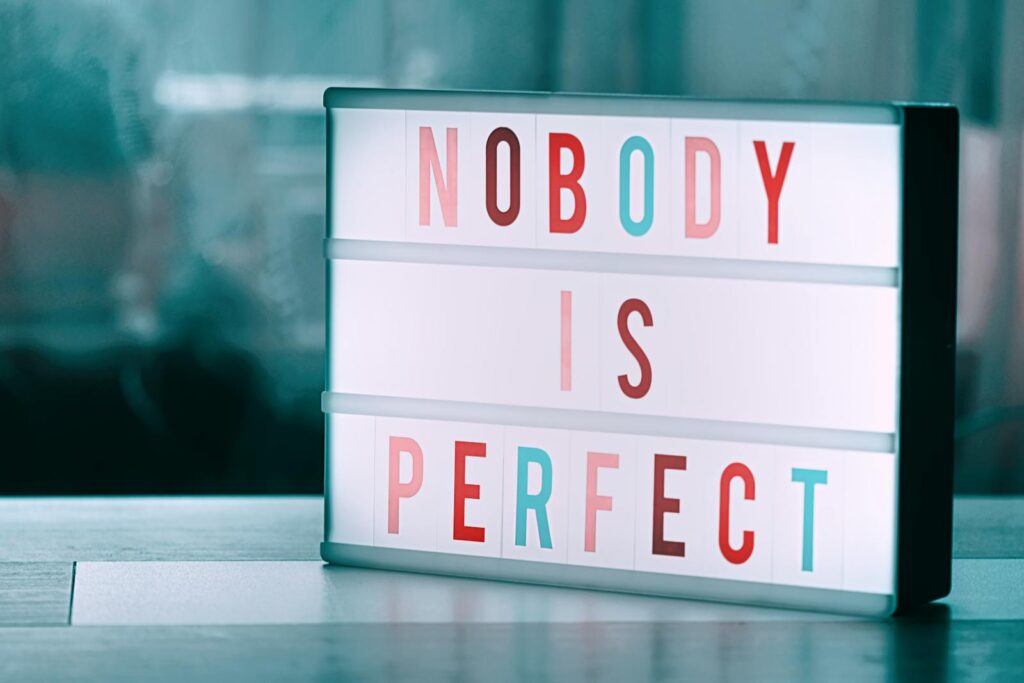
Perfectionism can hold you back more than you realise. It doesn’t just take away your joy, it often prevents you from even starting.
I know this from my own experience. I delayed launching my website for a long time because I thought it wasn’t good enough yet.
Looking back, it wasn’t about quality.
It was fear.
What matters:
- Nothing and no one is perfect
- Starting imperfectly is better than not starting at all
What you can do:
- Set realistic goals
- Focus on progress, not perfection
- Allow yourself to be a beginner
4. Limiting beliefs
Your inner critic can quietly sabotage your potential.
Thoughts like “I can’t do this” or “I’m not good enough” are not facts.
They are beliefs you have learned over time.
Important:
Doubts are thoughts, not truths.
What you can do:
- Become aware of your inner dialogue
- Ask yourself where these thoughts come from
- Keep a success journal to remind yourself what you have already achieved
- Surround yourself with people who support you
- Use affirmations to reinforce new beliefs
5. Lack of clarity about what you really want
If you don’t know what you want, it is easy to feel lost.
Sometimes we had a clear vision once, but lost it due to setbacks or external influences.
And that is okay.
Your path can change. Your goals can change.
What matters is that you find something that feels meaningful to you.
What you can do:
- Ask yourself: What truly fulfils me?
- Try new things
- Remember: clarity comes through action, not overthinking
6. Caring too much about other people’s opinions
Fear of criticism or rejection can hold you back more than anything else.
But the truth is:
People who constantly judge others are often struggling themselves.
So why give their opinion so much power?
What helps:
- Accept that you cannot please everyone
- Remind yourself: Most people think about you far less than you assume
- Ask yourself: Will this still matter in five years?
7. Lack of trust in your own path
Do you doubt your path, especially when things take longer than expected?
Someone once said to me:
“Life is always working for you, not against you.”
At the time, I thought I understood it. But I didn’t fully feel it yet.
Learning to trust takes time.
Whether you call it life, the universe, or something else, the idea is the same:
Things are not happening against you.

What you can do:
- Trust the process
- Listen to your intuition
- Don’t give up too early
- Strengthen your belief through supportive thoughts
8. “I don’t have time”
Daily life can be busy. That is real.
But often, it is not about time. It is about priorities.
There is always a choice, even if it is small.
What helps:
- Make your growth a priority
- Schedule time for yourself
- Replace “I don’t have time” with
“It is not important enough right now”
That shift alone can change your perspective.
9. Change requires effort
Many people want change, but not the process that comes with it.
You don’t need to make things hard, but you do need to take responsibility.
Affirmations and manifestation can support you, but they do not replace action.
Real change requires:
- Clarity
- Consistency
- A system that works for you
What you can do:
- Focus on small, repeatable actions
- Build supportive routines
- Track and celebrate your progress
10. Being too hard on yourself
Self-realisation is not just about discipline.
It also requires self-compassion.
You want to grow, and that is a good thing.
But being overly harsh with yourself will slow you down.
Even a 1% improvement per day creates powerful change over time.
What helps:
- Talk to yourself like you would to a close friend
- Acknowledge your progress
- Be patient with yourself
Your self-realisation starts today
Most of the blocks you face exist in your mind – and that means they can be changed.
Self-doubt, perfectionism, lack of self-love – they are all connected.
If you made it to the end of this article, you can be proud of yourself.
This was not a short read.
But it might be your first real step forward.