

Journaling for Beginners: How to Gain Clarity and Know Yourself Better
You want to start journaling, but you’re not quite sure how?
Then this article is for you.
Maybe you’ve even tried it before and stopped again.
Journaling is less about documenting your day like in a traditional diary.
It’s more about you.
About how you feel, what’s on your mind, and what kind of life you want to create.
It’s about reflecting on your experiences and gradually moving in a direction that feels right for you.
First, I’ll show you what journaling can help you with.
Then you’ll get simple tips to get started, including questions that make it easier.
How journaling can support you
Journaling helps you slow down and reflect on yourself and your life.
Self-reflection is an essential part of personal growth.
Your journal becomes a safe space where you can be honest, without expectations or judgment.
It can help you to:
- Organize your thoughts when everything feels overwhelming
- Understand your emotions instead of pushing them away
- Get to know yourself better, including your desires and patterns
- Practice self-love by taking intentional time for yourself
- Gain clarity and focus around your goals and your “why”
- Process stress and anxiety by putting things into perspective
- Live more consciously by recognizing what works and what doesn’t
Journaling is like a quiet observation of yourself.
Take a moment while reading and ask yourself:
When was the last time you consciously took time for yourself?
Why many people stop journaling
Many people start journaling and stop again after a short time.
Not because it doesn’t work, but because they expect too much.
There’s often the idea that you have to do it “the right way”, maybe write every day or immediately see changes in yourself.
And that creates pressure.
But journaling isn’t about being perfect.
It’s about being honest.
How to start journaling
To start journaling, you don’t need much.
You don’t need a special notebook or a lot of time.
You only need:
- a notebook or your laptop
- a few minutes for yourself
- the willingness to be honest
That’s it.
And still, starting can feel difficult.
You might be wondering where to begin.
Why do you want to start journaling?
Find your “why”.
If you don’t know what to write, start with a different question:
Why do you want to journal?
What is your intention?
Do you want to:
- feel happier
- understand yourself better
- gain more clarity
- be more present
- grow as a person
Once you know your why, everything else becomes easier.
Your questions will naturally align with it.
You can, of course, just start writing freely.
But personally, I find it more helpful to use questions as a guide instead of drifting into a diary style.
Questions to help you get started
If journaling feels difficult at first, prompts can be very helpful.
Especially in the beginning, questions give you direction.
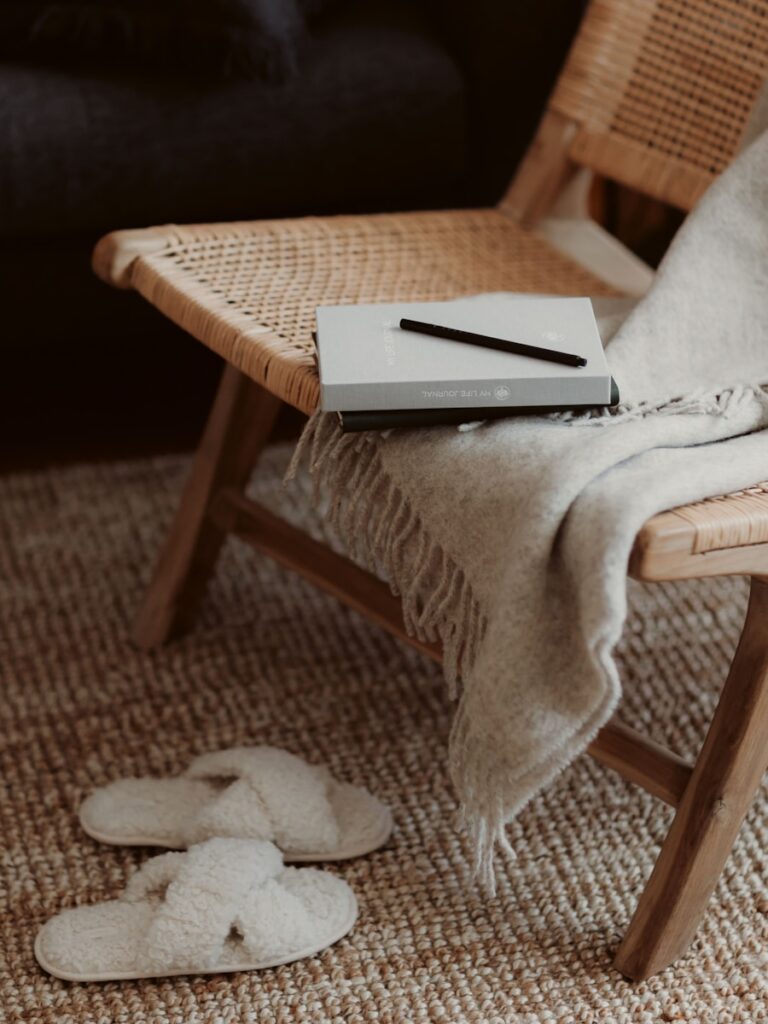
After a longer break from journaling, I personally used a guided journal to get back into it.
Structured questions can make a big difference.
Here are some of my favorite prompts to help you start writing:
If you want to get to know yourself better
- What is on my mind the most right now?
- How do I feel at this moment?
- Where do these feelings come from? Was there a specific situation or thought?
- What thoughts keep coming back?
- What do I need right now, even if I don’t want to admit it?
If you want to feel happier
- What felt good today?
- What am I grateful for right now?
- What genuinely makes me happy, independent of others?
- What could I do today to feel better?
- What used to bring me joy in the past that might still feel good today?
If you want more clarity
- What feels unclear in my life right now?
- What is on my mind that I can’t quite put into words?
- What decision am I avoiding?
- What would I do if I wasn’t afraid?
If you want to grow into your best self
- What is currently holding me back?
- How do I imagine my best self?
- What would my best self do today?
- What does my best self think like?
- What habits does my best self have?
How to stay consistent with journaling
The biggest challenge is not starting, but staying consistent.
Try to build a simple habit, something that fits naturally into your day, without pressure.
Here are a few things that helped me:
- Don’t expect perfection. There will be days when you don’t feel like writing, and that’s okay.
- Small steps matter. Even five minutes is enough.
- Make it easy. Keep your journal somewhere visible.
- Allow breaks. Missing a day doesn’t mean you failed. Just continue the next day.
- Acknowledge your effort. Every page you write is an act of self-connection.
Journaling is not a complicated tool.
It’s your personal space for reflection, creativity, and calm.
All you need is a notebook or your laptop and a few minutes of your time.
If you write down three things you’re grateful for tonight, you’ve already started.
And that’s where the real value lies:
In small, consistent steps that bring more clarity, ease, and connection to yourself.